
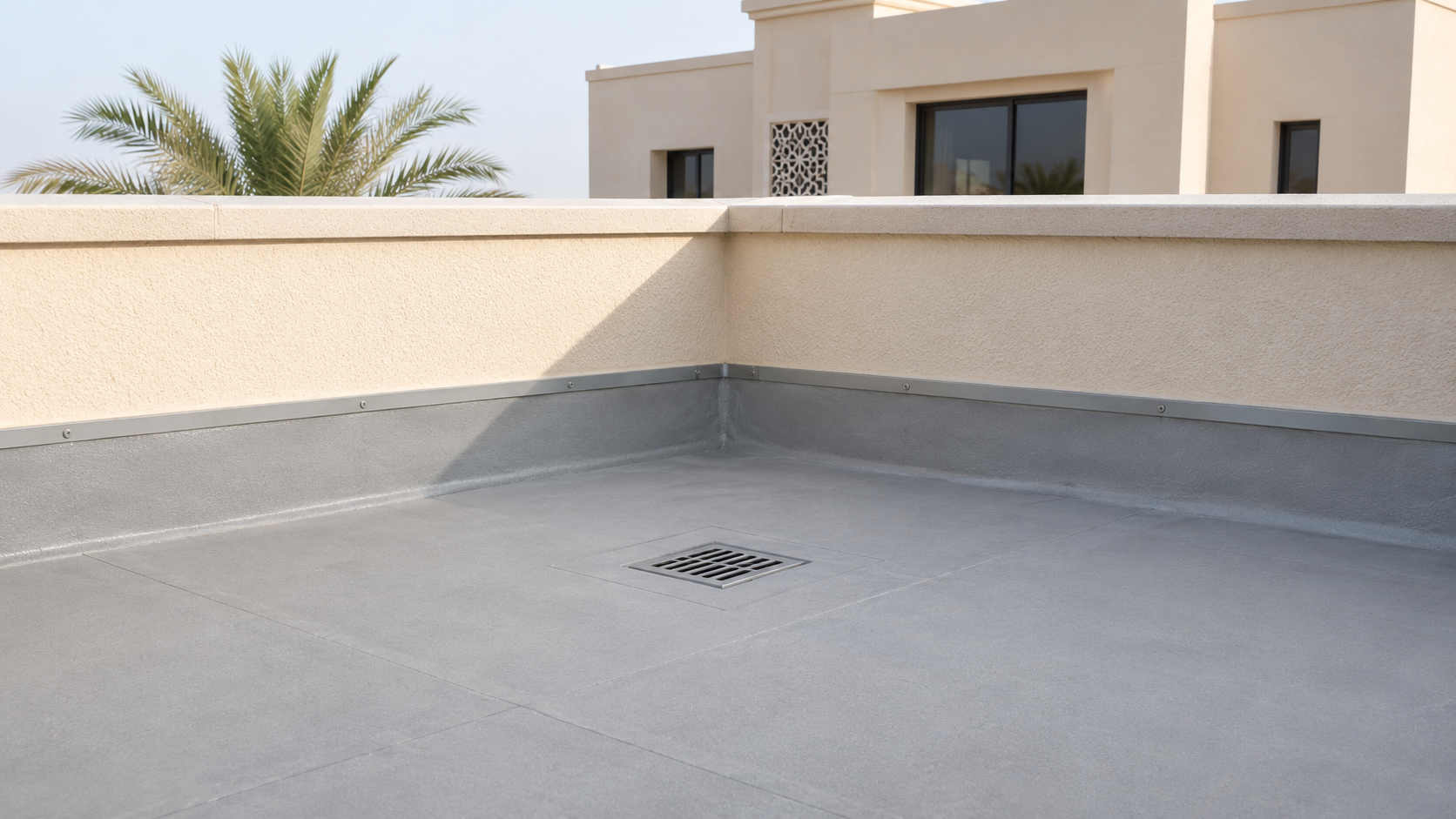
Waterproofing in Dubai starts with knowing where water can enter your property. On a villa roof, it might be a joint beside the parapet. In a bathroom, it could be the area around a floor drain. Because each area faces different conditions, the right repair depends on how water gets in and what sits beneath the surface.
This guide explains the main waterproofing systems, what affects the price, and which questions to ask before you approve a quote.
Waterproofing creates a barrier against water. It helps protect concrete, steel, and interior finishes from moisture damage.
On exposed roofs, heat and daily temperature changes can cause materials to expand and contract. Over time, that movement can stress joints and seams. In addition, dust and debris can block drains, leaving water on the roof after rain. Below ground, the risk depends on soil and groundwater conditions at the site.
The Dubai Building Code calls for roof-deck waterproofing and rainwater drainage. If you plan work on an existing property, ask your contractor which code and project requirements apply.
Contractors often use liquid-applied membranes or bituminous sheets on flat roofs and terraces. For example, a liquid system can suit a roof with several pipe openings or changes in shape. Sheet systems require careful work at overlaps, edges, and joints.
On podium decks, the membrane may sit beneath paving or landscaping. As a result, repairs can involve removing those finishes. Ask how the contractor will protect the membrane during installation and check it before covering it.
Basement waterproofing depends on how water reaches the structure. For example, water in the soil can press against walls and floor slabs. The design may combine an external membrane, sealed joints, and drainage, depending on the site.
Dampness can also come from condensation or a plumbing leak. Therefore, identify the source before choosing a coating or repair.
In bathrooms and balconies, the membrane usually goes beneath the tiles. Pay particular attention to corners, floor drains, and pipe openings. These are points where the membrane has to connect with another surface or fitting.
Before tiling, ask whether the system calls for a flood test and how long the test should run. For pools and tanks, the coating must suit what it will hold. In particular, drinking-water tanks need a system suitable and certified for potable-water contact under the project requirements.
Start with a site inspection and ask the contractor to explain what they found. For example, if you have a ceiling stain, ask how they traced it to a roof defect, a pipe, or another source.
Next, compare written quotes. Check that each one covers the same work:
Finally, ask for examples of similar projects. You can also explore Servyx’s building protection services before arranging an inspection. servyxuae.com
The cost depends on the size of the area, the condition of the surface, the materials, and how easily the crew can access the site. For example, a roof with a sound surface may need less preparation than one with loose coatings or damaged screed.
Likewise, a bathroom repair can cost more if the crew needs to lift and replace tiles. After the inspection, ask for a quote that lists preparation, repair, testing, and reinstatement costs where they apply. That makes it easier to compare prices and see what each contractor includes.
Poor surface preparation can weaken the bond between the membrane and the surface. For instance, dust and loose coatings can prevent proper adhesion. In addition, poorly sealed drains, corners, and pipe openings can leave gaps for water to enter.
Another mistake is covering the work before the required checks. Once tiles or paving go down, finding a fault can mean removing those finishes. Therefore, confirm the testing sequence before work starts.
The lifespan varies with the product, installation quality, exposure, and maintenance. For example, an exposed roof membrane faces different conditions from one beneath tiles. Ask for the product’s expected service life, care instructions, and warranty terms.
Arrange an inspection if you see recurring damp patches, lifting seams, or water that lingers after rain. If you plan to retile a terrace or bathroom, check the waterproofing before the new finishes go in.
Yes, if water is entering through a defect that the repair addresses. However, a leak from a plumbing line calls for a plumbing repair. Trace the water source first, then choose the repair.
The Dubai Building Code calls for waterproofing on roof decks. For existing buildings, check with your contractor or the relevant authority about the requirements for your property and scope of work.
If you’ve noticed a damp patch, standing water, or a roof seam starting to lift, Servyx can inspect the area and explain the next step. Contact Servyx Technical Services to discuss your property and request a quote.

Servyx Technical Services LLC is a trusted provider of specialized technical solutions in Dubai. We focus exclusively on Clay Roof Tiles, Precision GRC & GRP Fabrication, and 100% Leakage Waterproofing Solutions across the UAE.
© Copyright 2026. Servyx Technical Services LLC. All Rights Reserved.